
+918048039161

VANYDENTALCARE https://www.vanydentalcare.com
Preview

This is your website preview.

Currently it only shows your basic business info. Start adding relevant business details such as description, images and products or services to gain your customers attention by using Boost 360 android app / iOS App / web portal.

919499010738

Services

Endodontics is a dental specialty that focuses on the diagnosis, treatment, and prevention of diseases and conditions affecting the dental pulp (the soft tissue inside the tooth that contains nerves, blood vessels, and connective tissue) and the tissues surrounding the root of the tooth. The primary treatment associated with endodontics is root canal therapy, but the field also encompasses other procedures aimed at saving teeth that might otherwise need to be extracted. Here are the key aspects of endodontics: 1. Root Canal Therapy (RCT) This is the most common procedure in endodontics, often referred to as a "root canal." It involves removing the infected or damaged pulp from inside the tooth, cleaning and shaping the root canals, and sealing them to prevent further infection. After the procedure, the tooth is usually restored with a crown to protect it from further damage. 2. Endodontic Diagnosis Endodontists are trained to diagnose various tooth and pulp problems, including: Pulpitis: Inflammation of the dental pulp, which can be reversible or irreversible. Apical Periodontitis: Infection or inflammation at the tip of the root, often caused by bacterial invasion of the pulp. Root Fractures: Cracks in the tooth that may affect the pulp and require specialized care. 3. Endodontic Retreatment In cases where a root canal fails, retreatment may be necessary. This involves removing the existing filling material, cleaning and reshaping the canals again, and refilling the space to resolve any ongoing infection. 4. Apisectomy (Root-End Surgery) If an infection persists after a root canal or retreatment, an apisectomy might be performed. This involves surgically removing the tip of the tooth’s root and sealing the root end to eliminate infection. 5. Traumatic Dental Injuries Endodontists also treat traumatic injuries to teeth, such as fractures, displacements, or avulsions (teeth knocked out). Depending on the severity of the injury, they may need to perform root canal therapy or other procedures to save the tooth. 6. Management of Cracked Teeth Teeth with cracks or fractures that affect the pulp may require endodontic intervention to avoid extraction. Cracked teeth can be difficult to diagnose, so advanced imaging and testing may be used. 7. Regenerative Endodontics This is a newer area of research and treatment in endodontics, focusing on regenerating the tissues inside the tooth and stimulating healing of the pulp tissue using stem cells or other biological materials. When to See an Endodontist: An endodontist is typically consulted when: A tooth is severely infected or damaged and requires root canal therapy. There is persistent pain, sensitivity, or swelling around a tooth that suggests pulp or root problems. A tooth has a complex root canal system that requires special expertise for cleaning and sealing. Endodontists are highly specialized and typically have more advanced training than general dentists in performing complex root canal treatments and other procedures to save teeth. They use specialized tools and techniques, including magnification and advanced imaging, to ensure successful outcomes.

No 1/2, Meenakshi Complex, Godhavari Street, Bharat Nagar, Adambakkam, Chennai - 600088

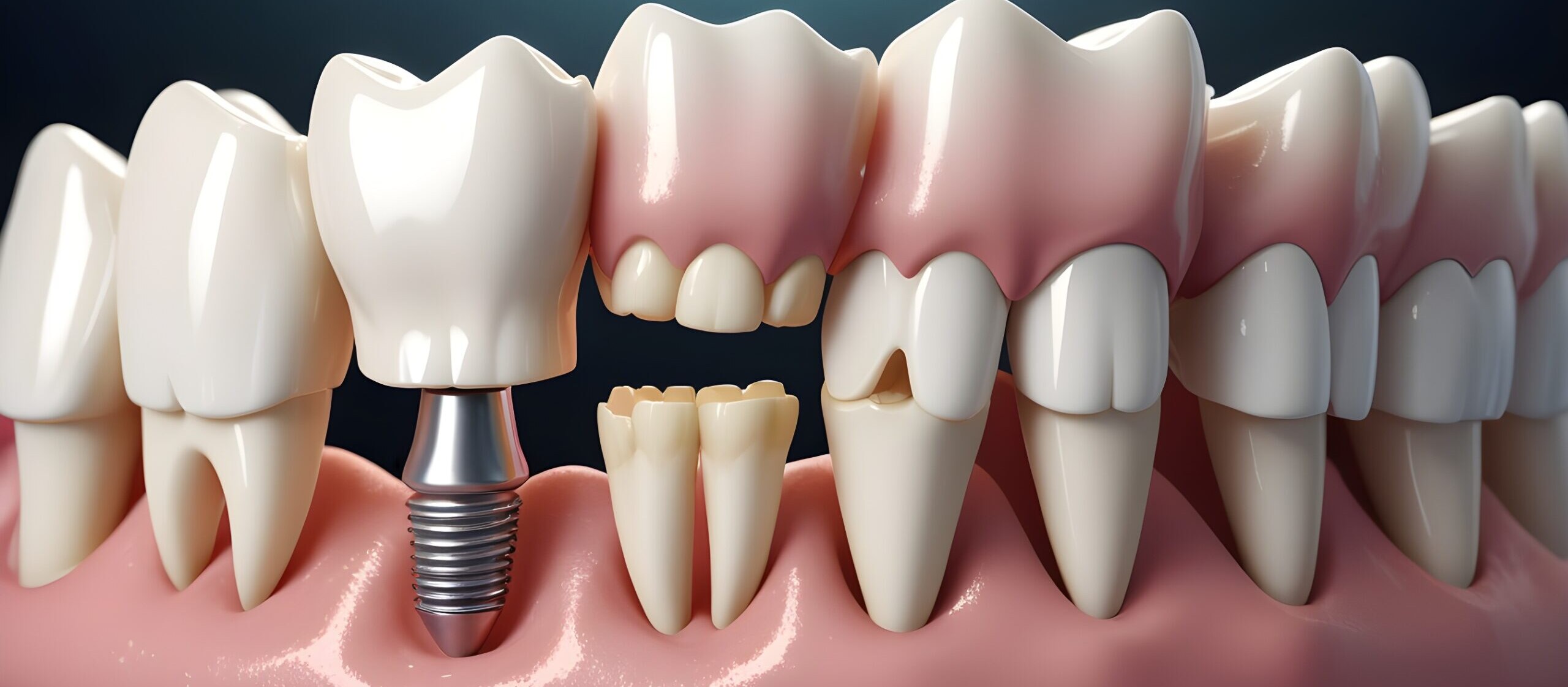
A full mouth implant is a dental procedure that involves replacing all of a person's teeth in either the upper or lower jaw (or both) using dental implants. These implants are titanium posts surgically placed into the jawbone, which act as replacements for natural tooth roots. Once the implants have integrated with the bone (a process called osseointegration), custom-made crowns, bridges, or dentures are attached to restore the appearance and function of natural teeth.There are a few different approaches to full mouth implants, depending on the patient's needs and the condition of their jawbone. Here are the main types:1. All-on-4What it is: A popular method where four implants are placed in each arch (upper or lower) to support a full set of replacement teeth.Advantages: Typically, this procedure requires only four implants per arch, making it less invasive and quicker than other methods.Recovery: Many patients receive temporary teeth the same day as the surgery (known as "Teeth in a Day").Cost: Often more affordable than other full mouth implant options due to the reduced number of implants.2. All-on-6 or All-on-8What it is: Similar to All-on-4, but with six or eight implants per arch. This may be preferred for patients with more extensive bone loss or those seeking more stability.Advantages: More implants generally provide better support and may be more suitable for patients with significant jawbone loss.Recovery: Typically, healing and osseointegration may take longer compared to All-on-4.3. Traditional Full Arch ImplantsWhat it is: Involves placing a larger number of implants (typically 6-10 per arch) to support a fixed bridge or set of dentures.Advantages: Provides a more stable and natural-feeling result, particularly for patients with enough healthy jawbone to support multiple implants.Recovery: As with All-on-6/All-on-8, this method may require a longer recovery time and healing period.Benefits of Full Mouth ImplantsImproved Functionality: Restores full chewing ability, making eating and speaking easier and more natural.Long-term Durability: Implants can last for decades if properly cared for, often outlasting bridges or traditional dentures.Better Aesthetics: Custom-made teeth provide a more natural appearance, with options that can closely mimic the look of real teeth.Jawbone Health: Implants stimulate the jawbone and help prevent bone loss, which is a common issue with missing teeth.ConsiderationsCost: Full mouth implants are a significant investment and are generally more expensive than other tooth replacement options. However, they are often a one-time cost and can provide long-term benefits.Healing Time: Full mouth implant procedures may require several months for complete healing and osseointegration, although temporary teeth can often be placed right away.Bone Density: If a patient has insufficient jawbone density, bone grafting or sinus lifts may be required before implants can be placed.The ProcessInitial Consultation: A comprehensive examination, including X-rays and 3D imaging, to evaluate bone density and determine the best treatment plan.Surgical Placement: The implants are surgically placed into the jawbone. Depending on the technique, temporary teeth may be attached at this time.Healing & Osseointegration: The implants integrate with the jawbone, which takes few to several months.Final Restoration: Once the implants have fully integrated, permanent teeth (crowns, bridges, or dentures) are fabricated and attached.Potential RisksInfection, implant failure, or complications related to the surgery.Discomfort or swelling post-surgery, which is typically managed with pain medication and ice.Need for ongoing maintenance and good oral hygiene to ensure long-term success.If you're considering full mouth implants, it's important to consult with a qualified dentist to determine the best approach for your individual needs and oral health condition

No 1/2, Meenakshi Complex, Godhavari Street, Bharat Nagar, Adambakkam, Chennai - 600088

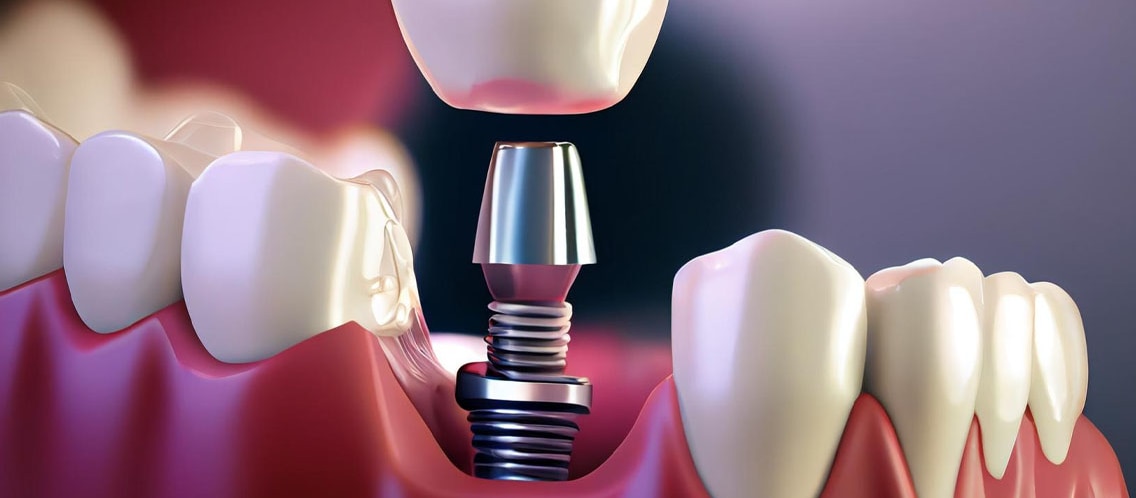
A dental implant is a titanium post or frame that is surgically placed into the jawbone beneath the gum line. It serves as a replacement root for a missing tooth. Once the implant integrates with the jawbone through a process called osseointegration, a crown, bridge, or denture can be attached to restore the function and appearance of the missing tooth.There are typically three main components to a dental implant:1. The Implant (Titanium Post): This is the part that is placed into the jawbone and acts as the root for the new tooth. 2. The Abutment: This is a connector piece that fits on top of the implant and holds the crown or other restoration in place.3. The Crown: This is the visible part of the implant, designed to look like a natural tooth.Dental implants are a long-term solution to tooth loss and offer several advantages over other methods, such as dentures or bridges. They provide better stability, preserve jawbone health, and are more durable and comfortable. However, they require a good amount of healthy bone in the jaw to be effective, and the process involves surgery, which may take few months to complete.

No 1/2, Meenakshi Complex, Godhavari Street, Bharat Nagar, Adambakkam, Chennai - 600088

Meet Our Doctor

Dr Vasanth K

Dr Vasanth K

DENTAL SURGEON

Phone +91-9499010738

No 1/2, Meenakshi Complex, Godhavari Street, Bharat Nagar, Adambakkam, Chennai - 600088

Latest Update

Vany Dental Care Adambakkam Chennai Dental Implant...

It's Done!!

Your appointment is confirmed

Doctor Name:

Date & Time:

Contact:

Address: No 1/2, Meenakshi Complex, Godhavari Street, Bharat Nagar, Adambakkam, Chennai - 600088

Appointment details has also been shared with you on your mobile number . Please arrive atleast ten minnutes ahead of the scheduled time.

services